

“Doesn’t reflect how fans engage with music today”: YouTube’s decision to stop reporting data to the Billboard charts is a sign of the times
YouTube dropped a surprise announcement on Dec 17, confirming that the platform planned to stop sending music data to Billboard. As a result, one of the longest partnerships in chart history moved toward an abrupt halt.
The decision arrived after years of disagreement over streaming math, just one day after Billboard revealed changes to its chart formulas. Even then, YouTube said those updates fell short.
YouTube cuts ties with Billboard
In its official blog post, YouTube explained its frustration in blunt terms. “YouTube is where billions of fans worldwide connect with music,” the company wrote. Still, the statement argued that “the incredible work artists do to build a community on YouTube and their massive fan engagement” was being undervalued.
YouTube then criticized Billboard’s methodology. According to the post, Billboard relied on an “outdated formula” that favored paid subscription streams over those that were ad-supported, like YouTube. Because of that, ad-supported plays carried far less weight.
“This doesn’t reflect how fans engage with music today and ignores the massive engagement from fans who don’t have a subscription,” according to the statement. The company added that streaming made up 84% of U.S. recorded music revenue. Therefore, it pushed for equal treatment across formats. “We’re simply asking that every stream is counted fairly and equally,” the post said, adding, “Every fan matters, and every play should count.”
Billboard announced that its streaming calculations would change starting Jan. 17, but subscription-based streams would still carry extra weight over ad-based streams.
YouTube said the compromise failed. “After a decade-long partnership and extensive discussions,” the platform claimed Billboard refused “meaningful changes.” Therefore, YouTube confirmed its data would stop being delivered after January 16, 2026. Until then, it directed fans to its own charts.
Social media reactions to the news
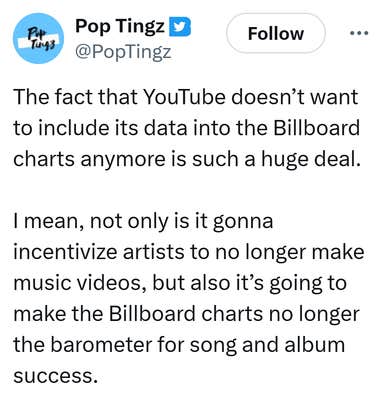
On X, reactions ranged from panic to dismissal. @PopTingz called the move “such a huge deal.” The account warned it could discourage music videos. It also argued Billboard would no longer serve as “the barometer for song and album success.”
Others pushed back, like @AriBradshawAZ, who noted, “Billboard was still the barometer even in 2012 when YouTube wasn’t included. It had some clear inaccuracies like ‘Gangnam Style’ stalling out at #2 behind ‘One More Night’.”
Some critics welcomed the shakeup. @DLJAY_ argued Billboard stopped reflecting real listening years ago. “They haven’t been a barometer for a long time. Since streaming, they’ve always been a measure of obsessive consumption of internet fandoms. Not authentic listenership.”
Others focused on visuals instead. @Kougeru dismissed fears around videos entirely. “Lol, no one’s gonna stop making music videos. The returns from ad revenue are more than worth it. And music videos are the best way to advertise a song. They’re vital.”
The internet is chaotic—but we’ll break it down for you in one daily email. Sign up for the Daily Dot’s newsletter here.
Sign up to receive the Daily Dot’s Internet Insider newsletter for urgent news from the frontline of online.
The post “Doesn’t reflect how fans engage with music today”: YouTube’s decision to stop reporting data to the Billboard charts is a sign of the times appeared first on The Daily Dot.
Source link
Categories Social Media
Tags social media